Demeo's Definitive Dungeon Crawl Upgrade
Demeo has held a special place in VR for years, particularly for players who enjoy tabletop strategy with friends. It's often compared to Dungeons & Dragons, but in truth it always sat slightly outside true role-playing territory: more dungeon crawler, less storytelling. So, you can imagine the collective nerdgasm that occurred when an official collaboration with Wizards of the Coast was announced. A fully licensed D&D crossover felt like the closest chance yet to play genuine Dungeons & Dragons in VR.
Before anyone sets expectations too high, it's important to state plainly: Battlemarked does not convert Demeo into a complete D&D experience. At its core, it is still primarily Demeo, albeit wrapped in a new story structure, paced differently, and layered with a few meaningful gameplay additions. If that's not what you were hoping to hear, then I'm sorry. I truly am. But don't despair too much, my geeky brethren, because what Battlemarked does deliver is a significantly better way to play the game, particularly if you already enjoyed the original.
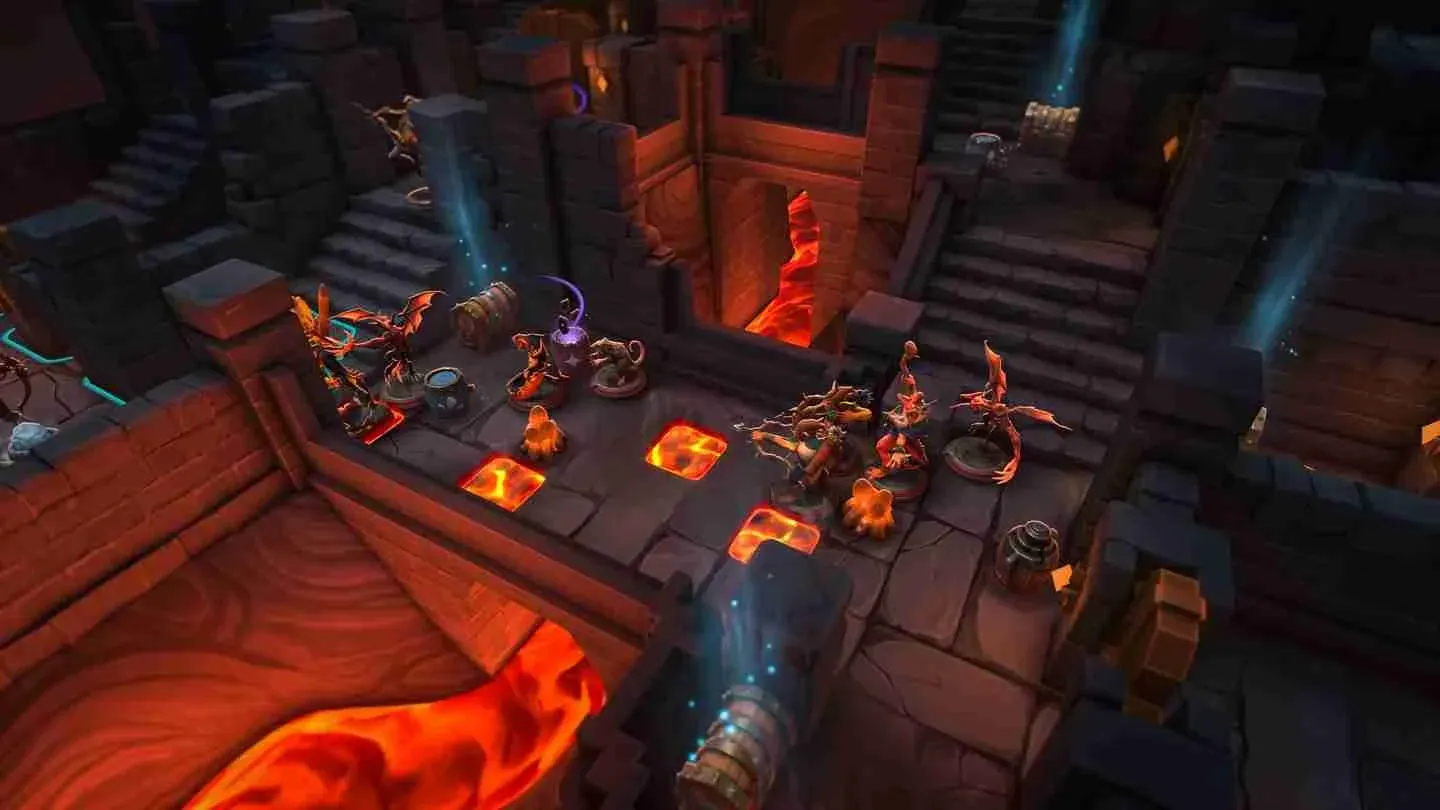
For newcomers, Demeo (as a franchise) is a cooperative tabletop dungeon crawler. Up to four players choose characters from classic fantasy archetypes, draw ability cards, and maneuver miniature champions across maps full of enemies, traps, hazards, and treasure. Traditionally, a Demeo run took the form of a three-level crawl ending in a boss encounter. Battlemarked retains that familiar foundation but instead structures the adventure around a narrative campaign composed of main missions and optional side quests.
The story doesn't drastically change the tone of the game, nor does it transform it into full tabletop role-play, but it does add some welcome depth and direction. Missions push you toward objectives rather than simply toward the next room key and choosing whether to progress the main quest or detour onto a side quest gives the entire experience more shape. Surprisingly (for me at least), the narrative elements enhance rather than obstruct the fun and make completing tasks feel far more rewarding.
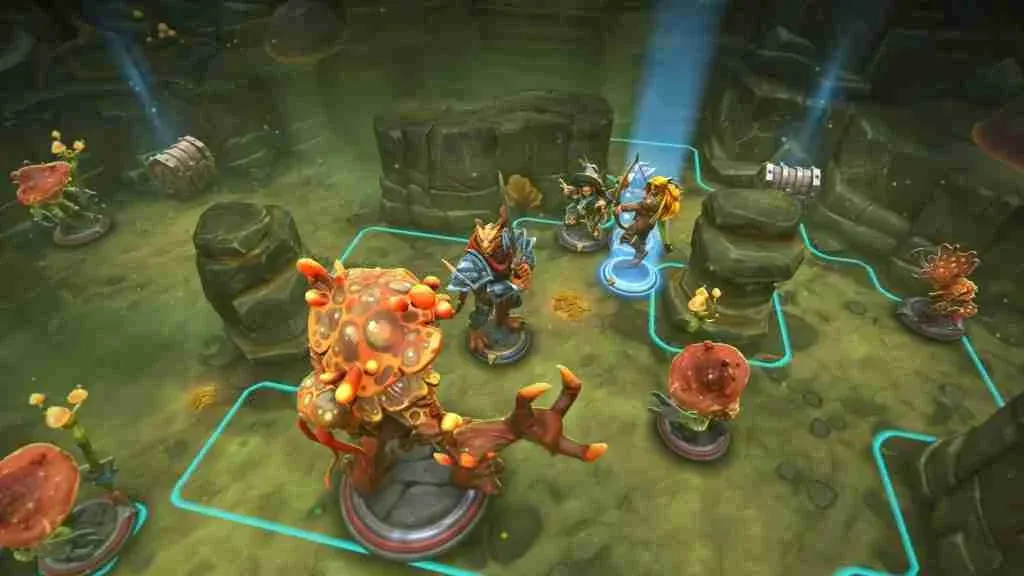
Battlemarked includes two full story campaigns at launch, each offering roughly six to eight hours depending on how deeply you engage with those optional objectives. Completing story missions also unlocks "one-shot dungeons" that replicate the original three-tiered dungeon crawl, essentially blending the best of both formats.
The narratives that you will play through are hardly setting a new standard in virtual storytelling, but nonetheless they are an excellent introduction to this format. Characters are voiced well enough to engage you, and the way the main plots and side quests interweave makes the world feel believable and immersive. While true fans of high fantasy role-play games may be underwhelmed, offers a near-perfect introduction to the world of D&D for newer players. Fisher-Price "My First D&D," but not in any way as scathing as that sounds.
The fundamental mechanics remain broadly unchanged in Battlemarked: you still take turns moving your pieces around the board and perform most actions by playing cards. Every character class still fulfills classic fantasy game roles, and every action matters. Where Battlemarked makes its biggest improvement is pacing.
In standard Demeo, players often found themselves hoarding cards, reluctant to use abilities because replenishment was slow. That led to long stretches of basic attacks with minimal tactical expression. In Battlemarked, cards are acquired far more frequently, which immediately encourages players to use their abilities freely rather than saving them "just in case."
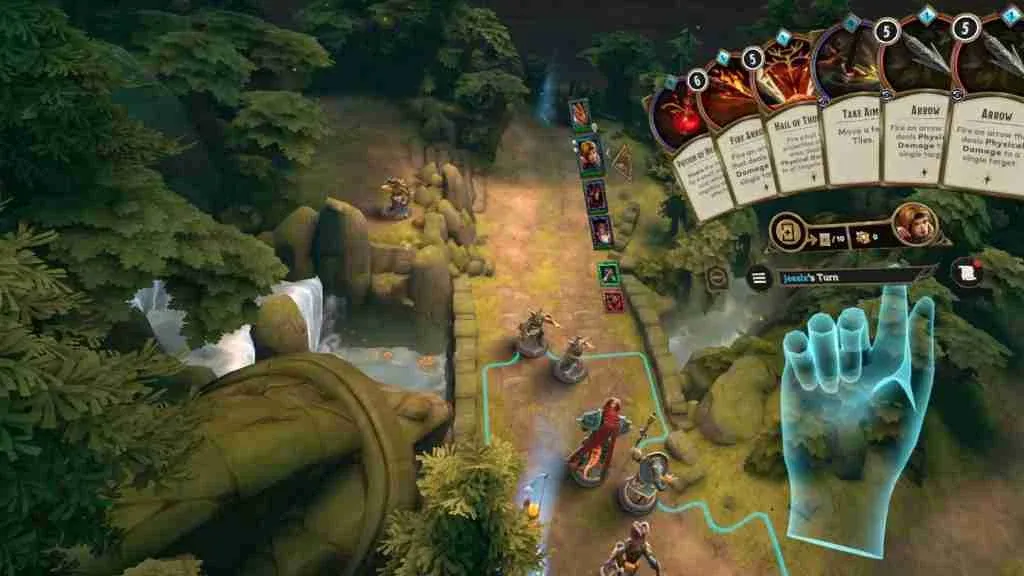
It's surprising how much this single change alters the experience. The gameplay becomes more dynamic, faster to play, and significantly more strategic. You aren't just managing survival, you're actively crafting turns, comboing cards, and using abilities creatively without the constant fear that you'll run out.
Additionally, Battlemarked adds a range of chance encounters to the gameplay, which forces players to roll dice to either escape harm or reveal secrets. It's a fairly lite interpretation of some core D&D mechanics, but it adds value insofar as it brings the gameplay just that little bit closer to a true role-play game experience.
Battlemarked also introduces character progression, and although too lite to be considered a full D&D experience, it is a welcome addition, nonetheless. As you advance through each campaign, you unlock weapons and build along one of three character-specific upgrade paths. These offer either stat enhancements to existing abilities or entirely new abilities tied directly to your class. It's a simple system, but it adds clear ownership over your hero and creates a reason to keep playing beyond simply finishing the story.
The good news is that once you've levelled up your character, you can then take them into your next campaign, so you can build a connection with a character that you can adventure with throughout the game.
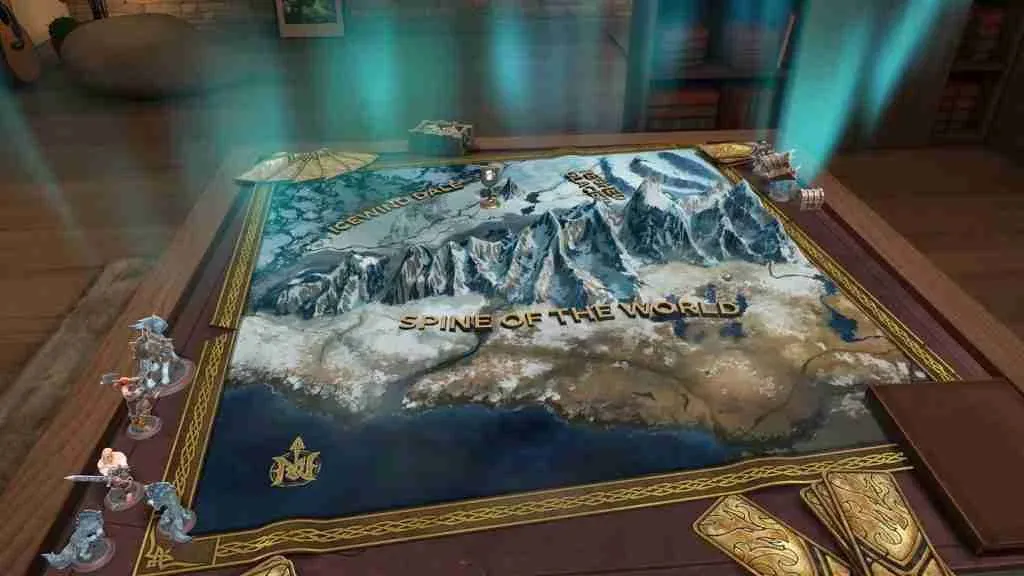
There is also some basic cosmetic customisation available as well, which adds to this sense of kinship with your character. Sadly, these are very superficial (for now at least), but I would love to see this expanded on. Adding the ability to mix and match the different races and classes, even if just from the stock lineup of six and six, would be a huge step in the right direction.
At launch, players will have six playable D&D-themed classes to choose from. Your party can consist of up to four heroes, and how you choose to divide control is entirely up to you. You can play solo, controlling all four characters yourself, but it's worth noting that when playing solo you can only level up your main character. The other characters (called "Hirelings") are fully functional but do not level. Playing solo was an entirely enjoyable experience. I didn't feel that my solo playthrough lacked anything.
That said, my preference is definitely to play with one other person. Controlling two characters each is, for me, the standout way to experience Battlemarked. It eliminates most of the downtime that turn-based systems usually create while still encouraging conversation and strategic planning. Playing with two players and four heroes keeps the game moving and still allows for meaningful tactical decisions without waiting excessively between turns.
That is good news because Resolution Games has done the seemingly impossible and made a multiplayer game where finding your friends is easy and intuitive. VR multiplayer lobbies can often be a clumsy mess of menus, mic issues, and slow connection processes before the actual game begins, but not in Battlemarked. Joining a session with a friend was so fast and smooth that Omar and I paused for a full five minutes in stunned appreciation. This feat is rare enough in VR to deserve praise.
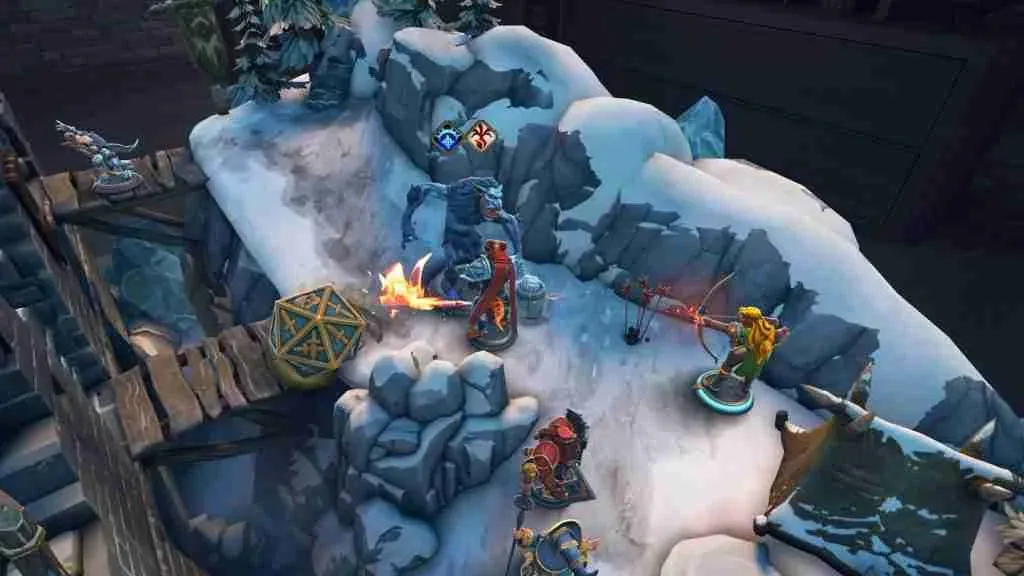
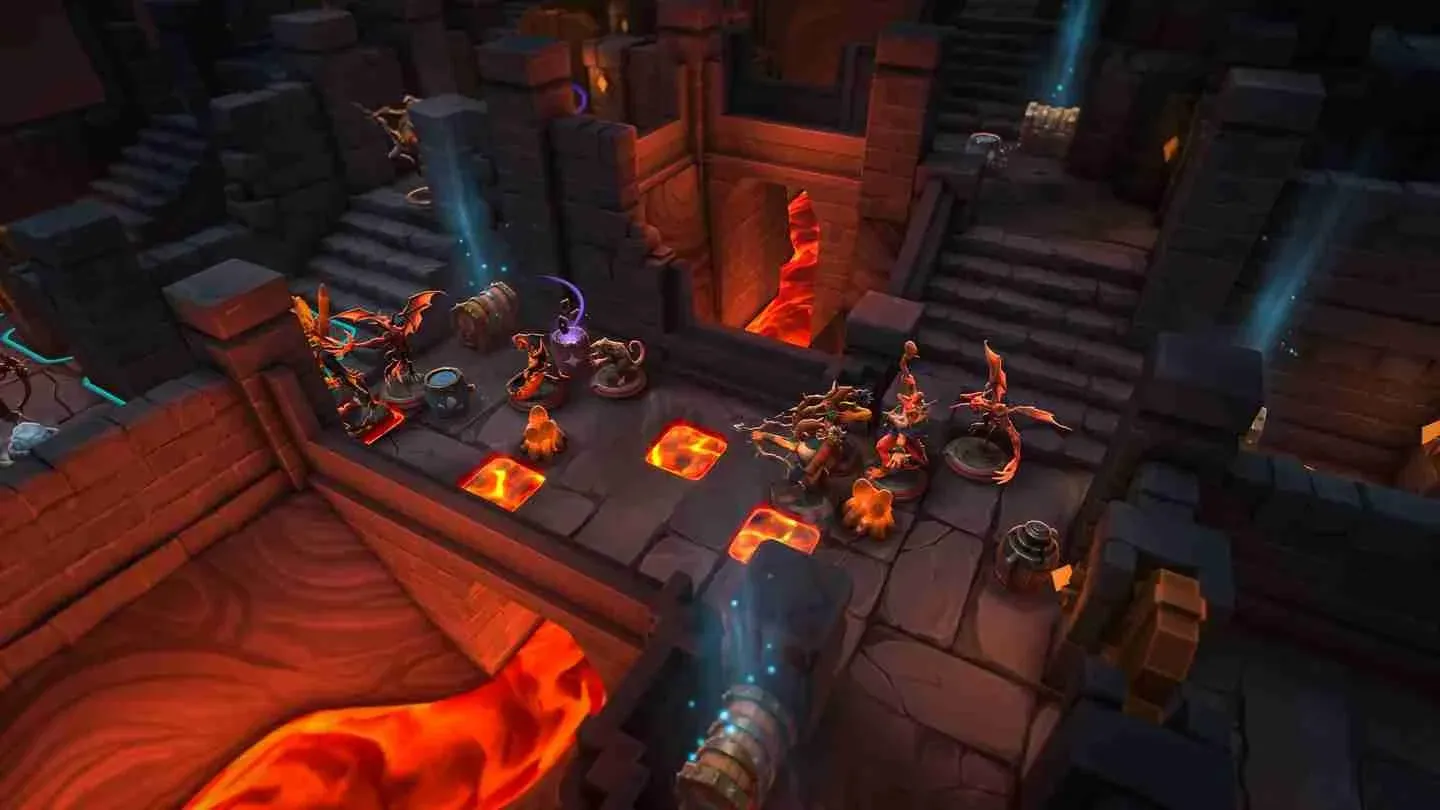
Battlemarked carries the same high production values Resolution Games is known for, and visually it feels every bit as polished as their past work. The ability to smoothly zoom into the board highlights just how much detail has been worked into each environment, miniature, and effect, detail you might otherwise miss if you only viewed the map from the usual tabletop vantage point. Character designs are strong across the board, with clear silhouettes, readable abilities, and an overall visual language that makes combat state, threats, and tactics easy to understand at a glance. More importantly, everything appears crisp, clean, and well-defined even on standalone hardware.
If there's one criticism, it's that the characters lack expressive animation. They behave like traditional board pieces, moved by an invisible hand rather than animated personalities. Under normal circumstances, that's perfectly fitting for a tabletop game. But having recently experienced how lively a similar format can feel with something like Glassbreakers, it's hard not to imagine how much richer Demeo could be if its heroes had even small flourishes of movement to match their excellent designs.
Battlemarked maintains an equally high bar on the audio side. Sound effects hit with clarity, from the satisfying clank and ping of combat to the ambient cues that make each board feel alive. Music lands exactly where it should, swelling during tense encounters and giving just enough dramatic push to make the experience feel like a high-fantasy tabletop adventure come to life.
Voice acting is extensive and surprisingly strong given how many characters speak throughout the campaigns. While performances span a wide range, none dipped into the "please make it stop" territory that can plague lower-budget VR titles. At its weakest, the voice work lands merely in the "not my favorite" category, and at its best it adds welcome personality and charm without ever getting in the way of the gameplay.
Demeo x Dungeons & Dragons: Battlemarked doesn't reinvent Demeo, nor does it provide the full D&D experience some players hoped for. What it delivers instead is nonetheless something of value: a refined, expanded, and more dynamic version of an already strong game. The storytelling adds structure and engages the player in the world, the new mechanics offer some genuine progression, and the faster, more ability-driven pacing improves the core gameplay.
For returning fans, Battlemarked feels like the definitive way to play. For newcomers, it's a great point of entry, not only to Demeo but to the world of Dungeons & Dragons as well. Even without full role-playing depth, this is a tabletop experience that understands why people come together to play in the first place, for tactical fun shared with friends.
If Demeo never fully clicked with you before, this might finally be the version that does.
As an Amazon Associate we earn from qualifying purchases. Prices and availability may vary.