Broken Promises, Stolen Trust
When Thief VR: Legacy of Shadow was first announced, I was pretty excited. I’d played a little of the old Thief games on PC, back in the day, and it seemed like the sort of game that would be a perfect fit for VR. Although fundamentally different, it might have helped heal the scar left by the cancellation of Splinter Cell VR a couple of years ago.
Then we got access to the game a few days before it got released, and honestly, it was buggy as hell. The first two levels left an excellent impression, but then, things fell apart; the checkpoint system was broken, the puzzle mechanics sometimes worked and sometimes didn’t, and the traversal systems would vacillate between smooth, stealthy gameplay and broken, clunky struggle.
We were a little traumatized, to dramatize the situation, and after being promised, nebulously, that ‘all’ of the problems would be dealt with in a Day-One patch, we decided we wouldn’t review the game as it stood, partly because we didn’t want to release a review that would be rendered inaccurate hours after it was posted, and partly because we wanted to like this game, and tried to give it the benefit of the doubt, especially since the first levels showed so much promise.
We wanted this game to be good.
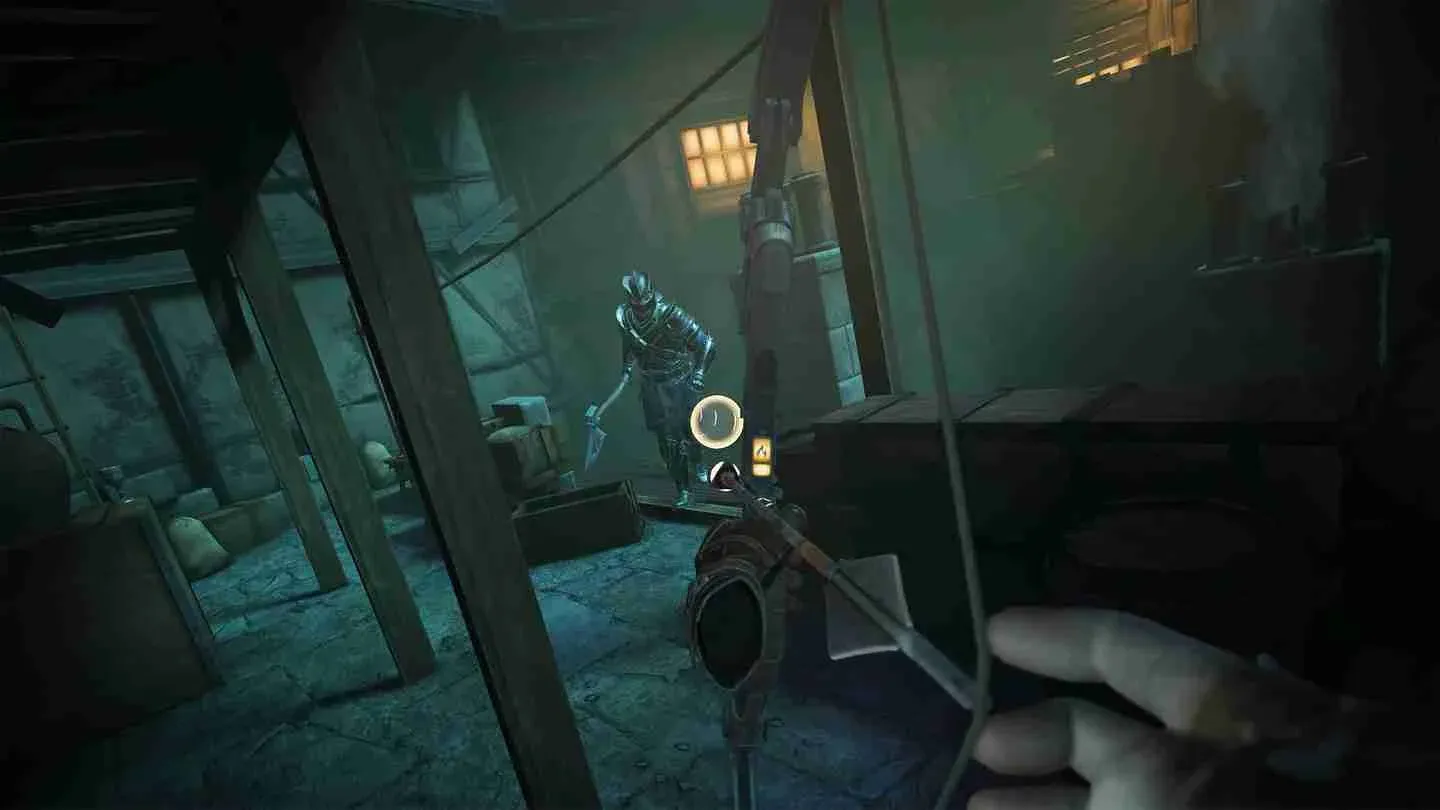
Thief VR introduces a new protagonist. You play as Magpie, a fledgling thief stepping into the role traditionally held by the game’s Garret. The tutorial level is well-crafted, introducing you to the game in an immersive fashion and getting you familiar with the game’s systems and mechanics. You can move around in the shadows; you have an indicator on the back of your hand letting you clearly know whether you’re in shadow or not, a very unrealistically binary affair, and you learn how to parry guard attacks and then knock them out. Overall, the game seems to have all the trappings of an immersive sim, a genre that it arguably helped create, and that other games like Dishonored have excelled at. It offered multiple paths, various ways to get around, and to accomplish your goals.
Everything seems primed for what should be an excellent single-player VR game.
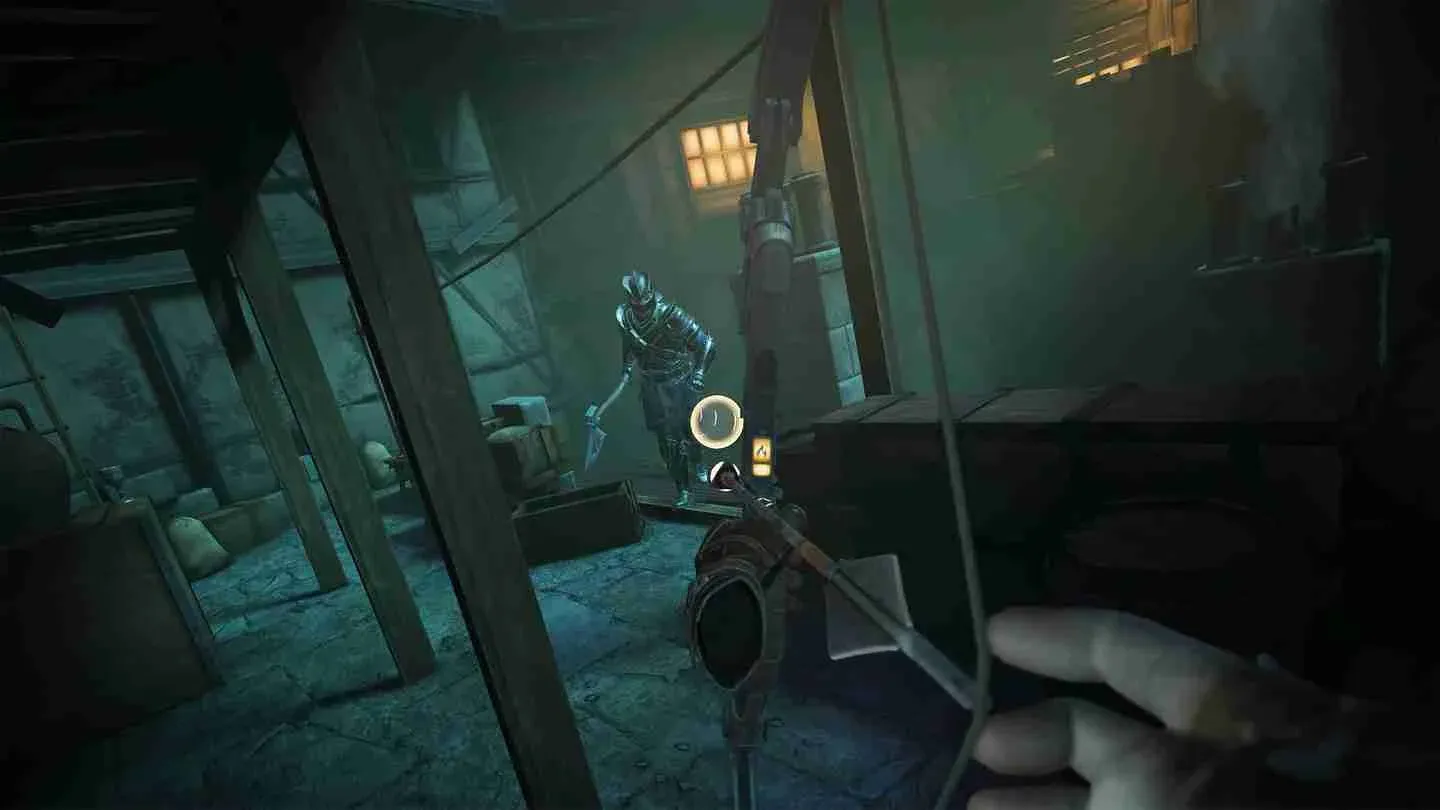
Not counting the tutorial mission, the game started showing its faults on the second level, a bookcase puzzle that was broken. The developers noted this in the first patch, calling the problem ‘rare’, and promising that the first released patch would fix it. But how rare can a problem be when three of us who played it experienced exactly the same problem? If you’re keeping score, that’s 100%.
Not quite what I’d call ‘rare’.
In any case, we soon found out - through trial and error - that the puzzle was ‘fixable’ by reloading the game to the last checkpoint, so we were able to continue through the game.
Having made it past the broken bookcase puzzle, I reached the third level of the game when the frame rate dropped dramatically, destroying immersion and making the game uncomfortable to play. I’ve got great VR legs, but when the frame rate drops this badly, no matter how good your VR legs are, you will start feeling some motion sickness. It made this level an absolute struggle, and despite continuing this level after the second patch was released, the frame rate was unimproved, and yet another bookcase puzzle was broken, leading to a wasted hour during which I looked for a book that didn’t exist.
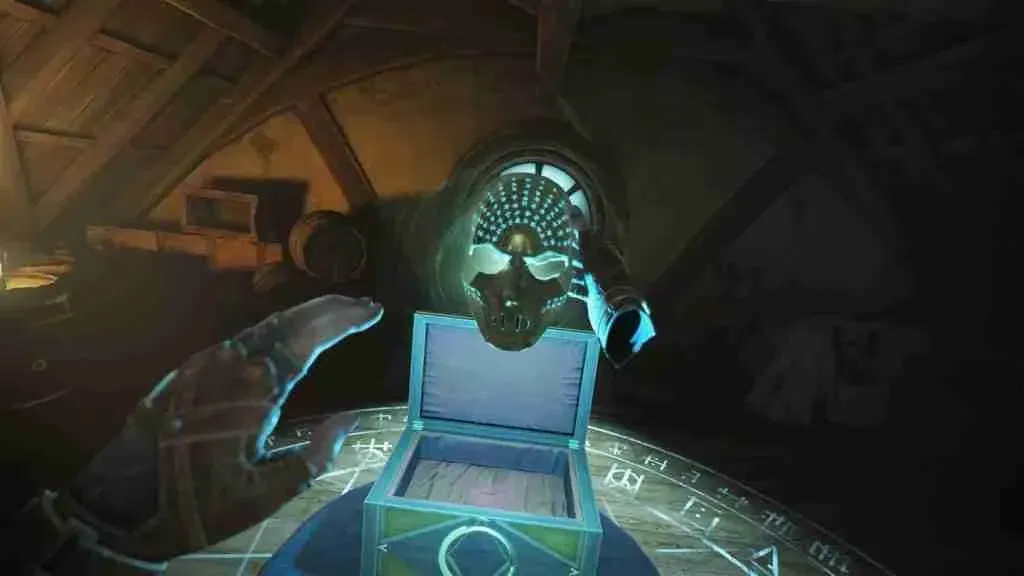
Video games, and, by extension, VR games, have one main currency to trade with the player, and that currency is trust. You have to trust that the game’s systems work, you have to trust that hitboxes are fair, that the game’s rules are consistent, and that its puzzles are not broken. You have to trust the game enough to know that if you’re not progressing, it’s solely because you haven’t done the right thing or found the proper object or followed the right clues. You have to trust the game.
Thief VR betrays you so often that by the time you’re halfway into the third level, you no longer trust the game, and along with that, you feel disrespected, like your time is of no value whatsoever.
By the time you’re two-thirds through the game, you know that sometimes you’ll mount off ladders or through windows effortlessly, and sometimes it’ll take a minute or two of struggle, completely shattering your immersion, you’ll know that although enemies initally fell to their knees on the first strike, so that you can render them unconscious in the second, they stop doing so in the last couple of levels. You’ll know that your bird companion, which initially came when you whistled near some bird-posts, now no longer shows up. Then you’ll hear something towards the end about how it’s now ‘returned’. Was it captured in some deleted cut-scene? I don’t know. Did I miss something while I was frustrated by the game's many inconsistencies? Perhaps.
At some point, I stopped caring. I can only take so much punishment.
Now, let’s be clear, Thief looks pretty good, but the problem is that there’s no synergy between form and function. A game like this should absolutely have dynamic shadows and a meticulously realized lighting system. Instead, you find that as long as the game registers you as in the ‘dark’, no matter how bright things appear to your eyes, the game’s binary view of lighting essentially renders you invisible, you’re not a stealthy thief, you’re the invisible woman, standing right in front of guards, waving your hands in their faces, and the poor bastards just can’t see you. That’s not stealth, that’s comedy.
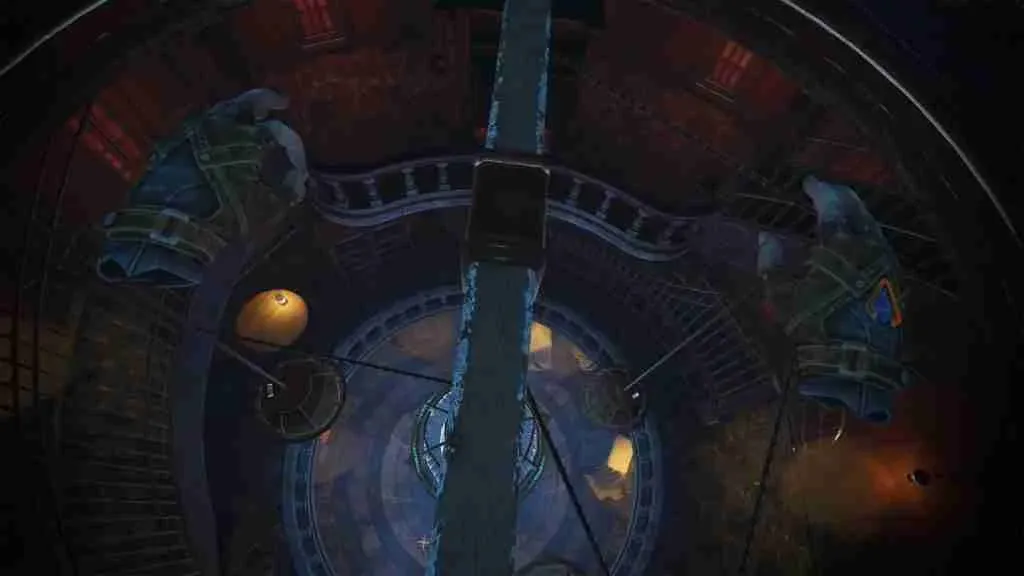
The art direction isn’t too bad, but there’s not a lot of variety here. Across six levels, one of which is a repeat location, the settings are somewhat similar, offering little variety in props, textures, or architecture. Again, what starts off as impressive quickly grows repetitive and stale.
The music in Thief is pretty good, and the voice acting overall isn’t bad. The original voice actor for Garret, Stephen Russell, is back, but feels underused. I was expecting a lot more banter between him and your character, Magpie, but didn’t get much of that. The conversations between the guards are entertaining enough, and the game’s general sound design is pretty good, with both audio and haptics being used quite effectively when you’re lockpicking, for example.
However, the real problem is with the use of spatial audio. It’s broken.
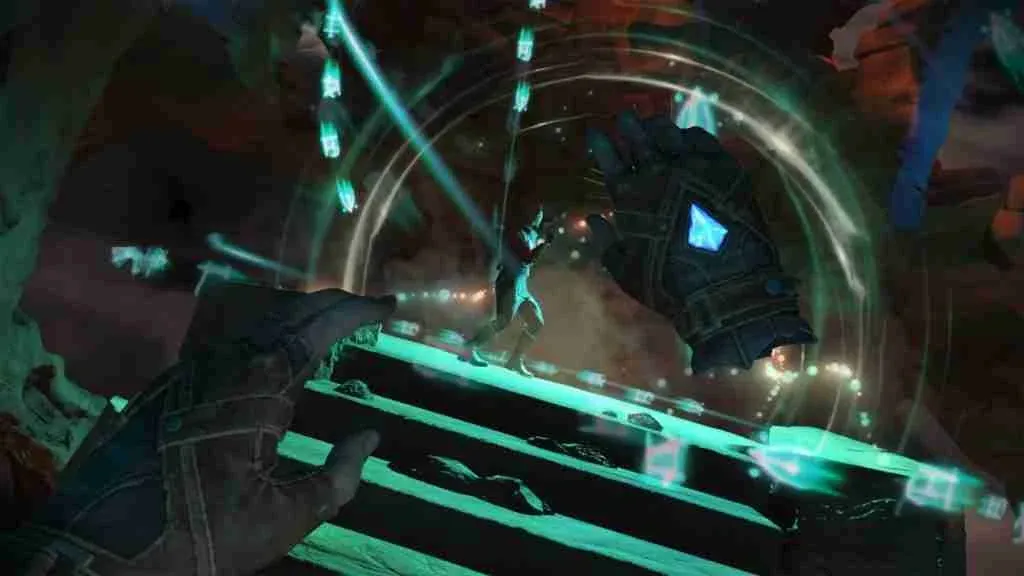
Many times throughout the game, I’d be standing behind a door, and I’d hear the sounds of a guard behind the door. Here I am, sneaking in, worried that I’ll be seen by the guard inside the room, and lo and behold! There’s nobody there; the audio is either misplaced or, perhaps, it’s an intentional fake-out, designed to falsely elevate the tension. It’s annoying, and again, another nail in the coffin of whatever trust you’re supposed to feel towards the game and its systems.
Thief VR, even without the bugs and glitches, is not a great game. It lacks length and variety, features the world’s stupidest NPC AI, and has an underwhelming narrative and an anticlimactic climax. Overall, once you’re past the early good impressions you get from the first levels, the game proves underwhelming.
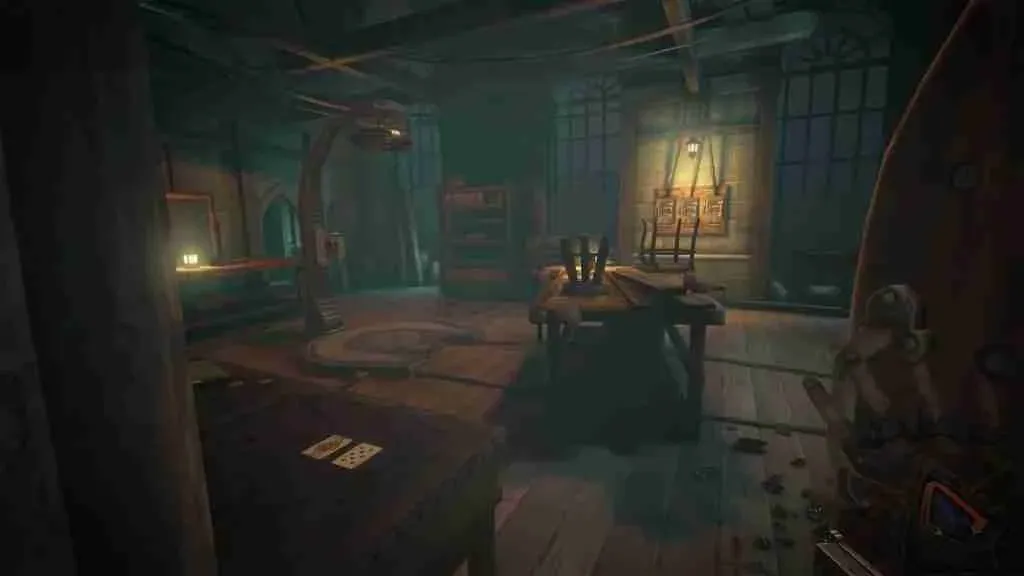
Add to that a smorgasbord of problems, starting with the disastrous ones at launch, and the existing ones even after two patches worth of fixes, and you’re left with a bit of a mess. The checkpoints are automatic and unreliable, sometimes returning you very early on in a level, no matter how far you’d gotten, which is especially frustrating when the only reason you restarted at the checkpoint is to fix broken mechanics. The textures aren’t always lined up with the geometry. Sometimes traversal mechanics, such as mounting off ladders or going through windows, work, and sometimes it’s horribly clunky and completely immersion-shattering. The lighting system is ridiculously binary and incredibly simplistic, leading to a host of ludicrous situations that make the stealth aspect laughable. Crouching sometimes breaks, leading to situations where the crouch button toggles between a medium and a slightly lower crouch rather than between standing and crouching.
It’s a mess.
Look, there's no getting around it: Thief VR: Legacy of Shadow is a game that could've been decent but underwhelming if it worked well but emerges as a massive disappointment and a lesson in how dangerous it is to release a game in an undercooked, buggy state. It quickly squanders both the promise of the franchise and the opportunity it had to shine in VR, alongside games like Batman: Arkham Shadow or Assassin's Creed: Nexus. More criminally, it absolutely sabotages the goodwill it engenders in its first two missions, which basically means you'll start regretting the purchase soon after your refund window has closed, assuming you're on Quest, and if you're on PSVR2, well, you know the drill, your opportunity for a refund disappears right after you've downloaded a title.
Maybe at some point in the future, Thief VR will become a good game, but for now, if you're looking for something to scratch that itch, you're better off buying AC: Nexus.
We came into Thief with high hopes, alas, we don’t always get what we want.
As an Amazon Associate we earn from qualifying purchases. Prices and availability may vary.