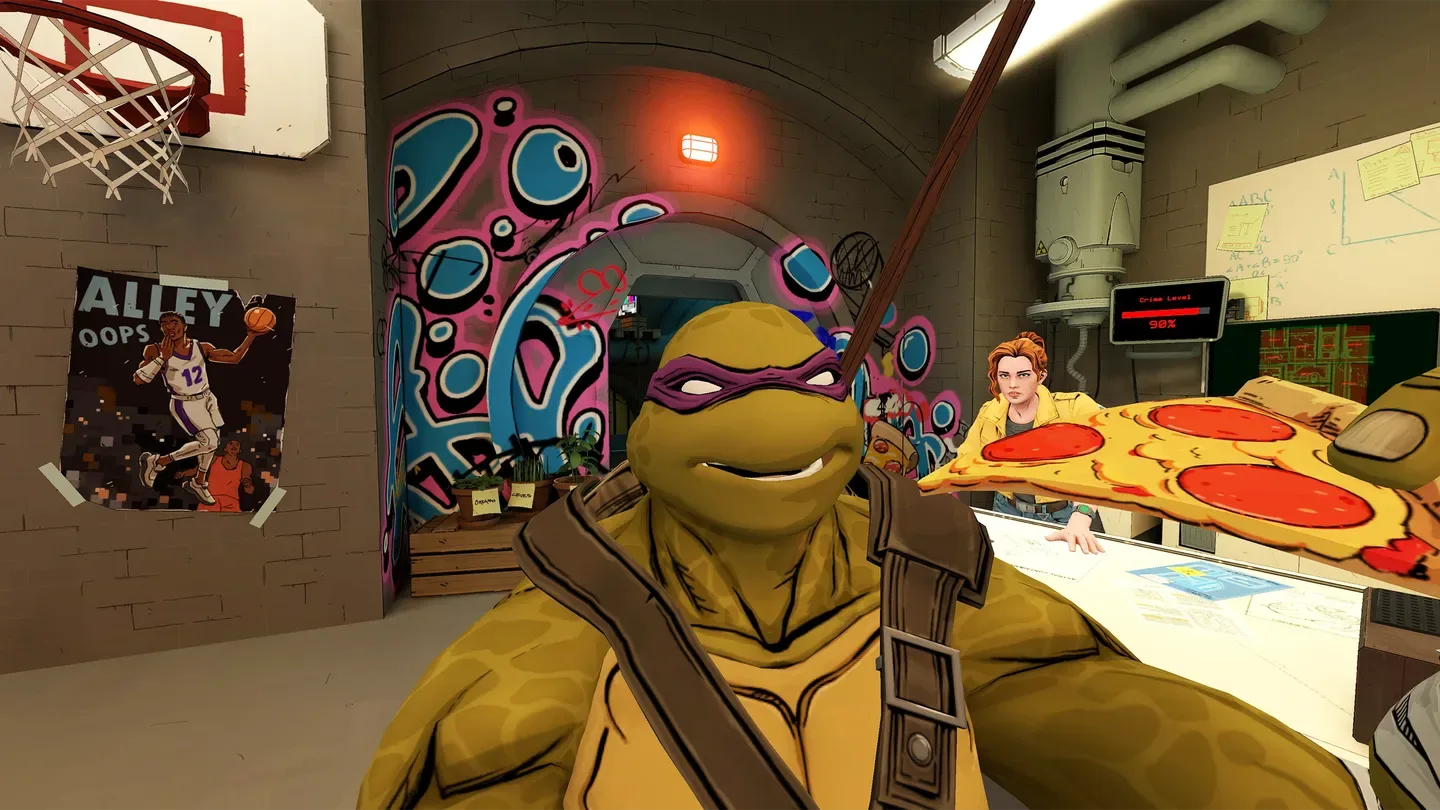
A Beloved IP's Semi Open-World Co-op Debut in VR
You remember when that big-name franchise announced a VR game, and we all got excited, but then it turned out to be shit? You know, that one that really meant a lot to you because you really loved it as a kid, or that one that is your favourite IP right now, and then they completely butchered it. I don’t even need to name a name here, because chances are you already have one in mind, and that small heartbreak - is probably still sitting with today, you as you read/hear this.
Well, it is with the heavy burden of such past disappointments that I trepidatiously approached Teenage Mutant Ninja Turtles: Empire City from Cortopia Studios. TMNT isn’t just another IP to me - it’s the IP. As I sit here preparing this review, cheerfully humming the classic 80’s theme tune and glancing over at the Raphael action figure on my desk, I’m aware that the weight of expectation was, for me at least, considerable.
So, if you’re like me, let me put you out of your misery early: I think that TMNT: Empire City is good. Genuinely good.
But it took me a while to get there.
Empire City is a semi open-world co-op action adventure that blends parkour traversal, combat, stealth, mini-games and side activities into one ambitious package.
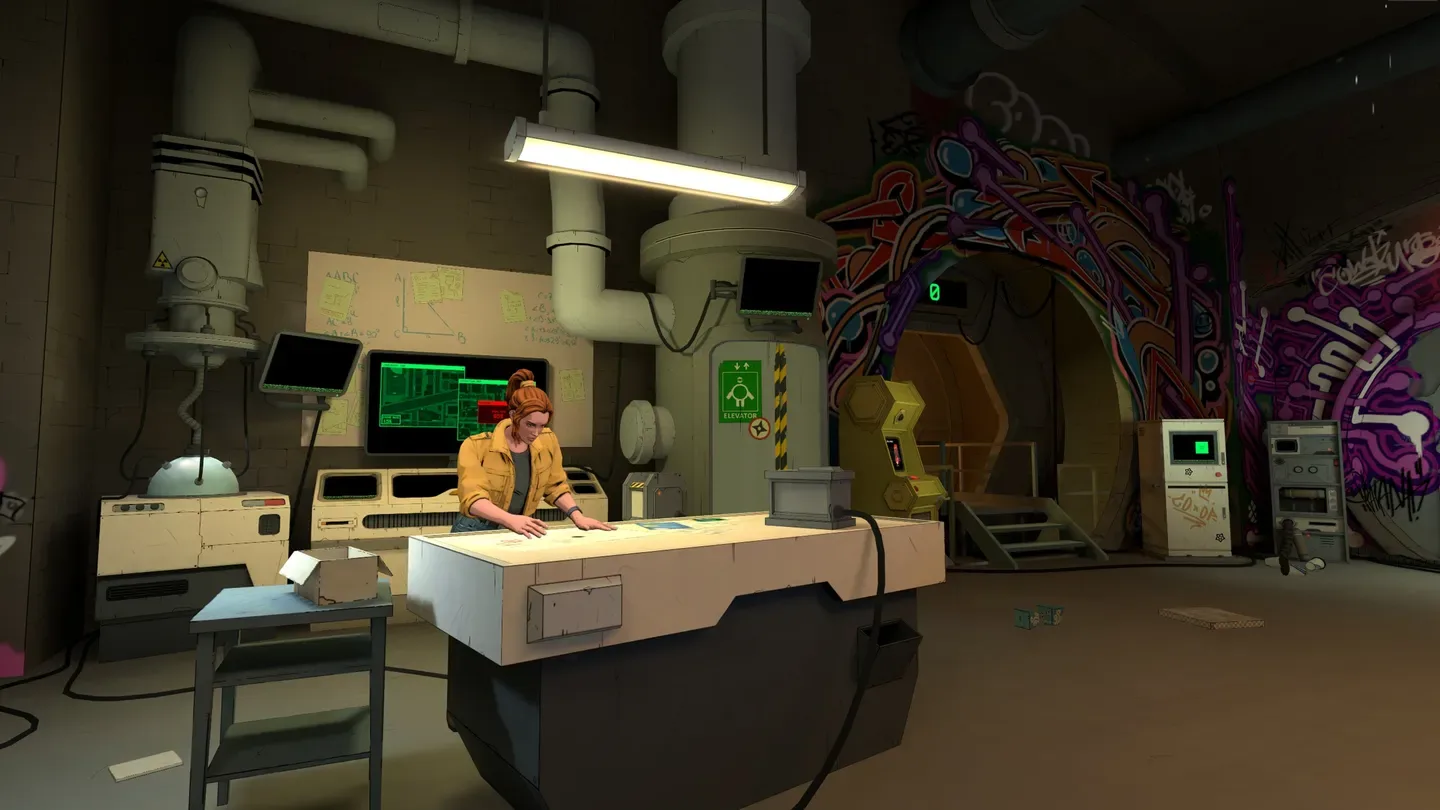
The game sees the turtles returning from a year-long absence to find New York City in trouble. Back at their sewer lair, familiar faces like April O’Neil, Casey Jones and Splinter help guide the boys as they investigate some dark magic and the return of the Foot Clan. Tonally, the plot absolutely nails it. The writing feels like it’s been lifted straight from a TMNT cartoon, comic, or film. It’s light, characterful, and hits all the right beats.
Structurally, the game opens with two distinct areas available - Chinatown and the Lower East Side - each acting as a small open-world space filled with story missions and various optional activities, all of which you’re free to explore at your own pace.
Campaign missions present themselves across these (and other) areas, sometimes in sequence and sometimes in parallel. This, coupled with side missions, gives players enough choice to stop the campaign from feeling overly linear, but unlike Ubisoft games, it never overwhelms.
Traversal is, without question, one of the standout elements of Empire City.
You’ll spend a lot of your time bounding across rooftops, climbing drainpipes, leaping between buildings and dashing through the skyline with an intuitive climbing and parkour system that’s accessible and expressive. As you progress, you unlock upgrades that further enhance your mobility, making traversal genuinely joyful.
For players who fully lean into the fantasy of being a ninja turtle - staying off the streets, moving unseen above the city - this is where the game really comes alive. This is a game that rewards you for embracing its identity. When you do, moving through New York becomes one of its greatest strengths.
You can walk around at street level, completing missions in order and playing as the same turtle the whole way through, but if that’s how you choose to play it, I suspect you’ll come away with a very different impression of the game than I did.
Story missions occasionally pull you into interior spaces like warehouses, where traversal takes a back seat to more traditional combat encounters and light investigation. Mechanically, these missions are essentially fetch-quests, but thanks to the bulk of side content available, they’re not too repetitive.
Early on in Empire City, combat feels a little too simple. Enemy variety is limited; encounters are relatively easy and it’s entirely possible to just swing wildly and brute-force your way through fights. However, as the game progresses, combat becomes more challenging and a more nuanced fighting style begins to evolve.
Suddenly mechanics like dashing, blocking, parrying and positioning become essential. By the halfway point, I found myself enjoying the flow of combat; darting in and out of encounters, mastering the weapons at my disposal, and using gadgets to turn the tide.
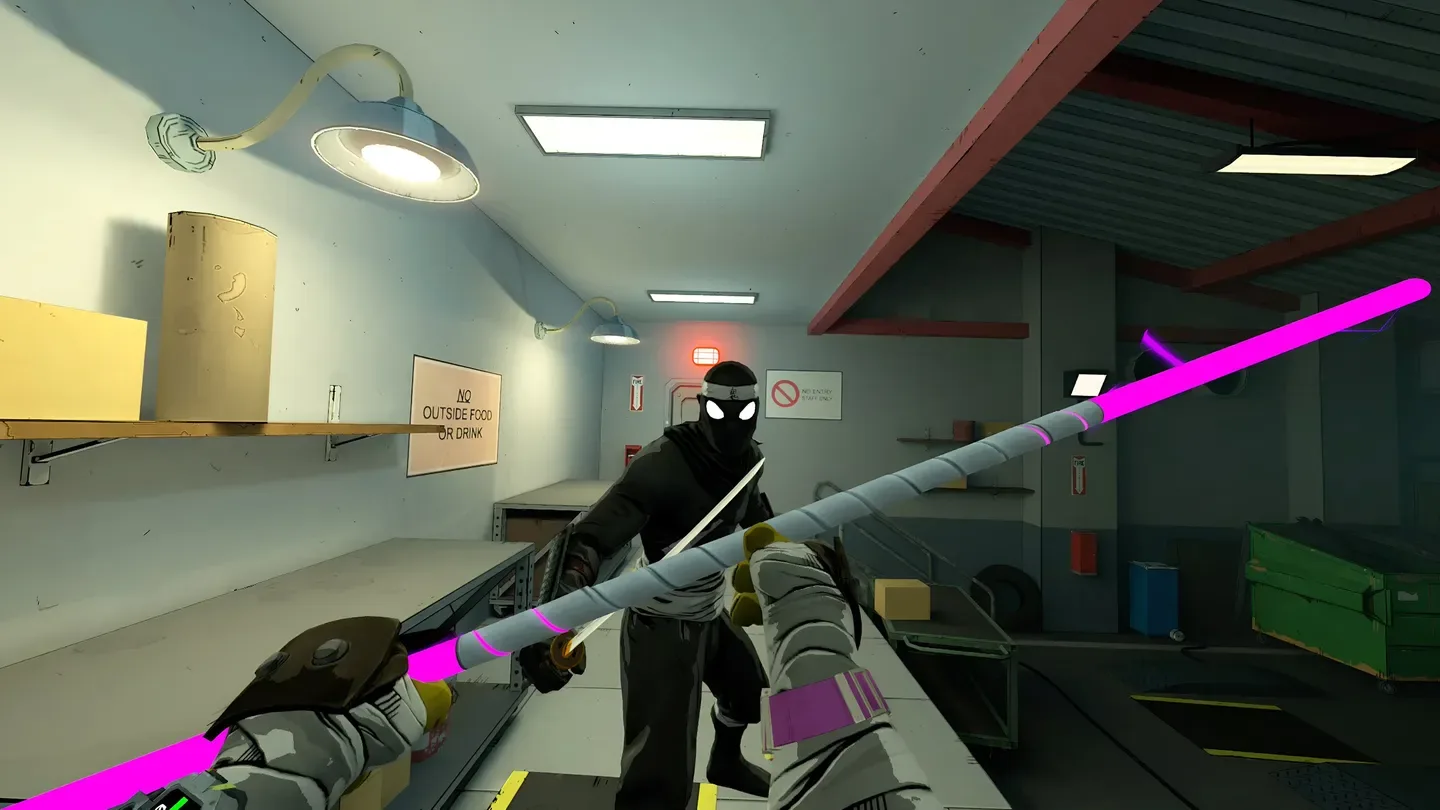
Each turtle’s weapon is a highlight. Donatello’s bow staff and Michelangelo’s nun-chucks are particularly well implemented - easily among the best incarnations of those weapon types in VR. Raphael’s Sai also feel excellent, especially once you start experimenting with the various grips you can use. Leonardo’s twin katanas, on the other hand, end up feeling more like kendo sparring sticks that fearsome blades.
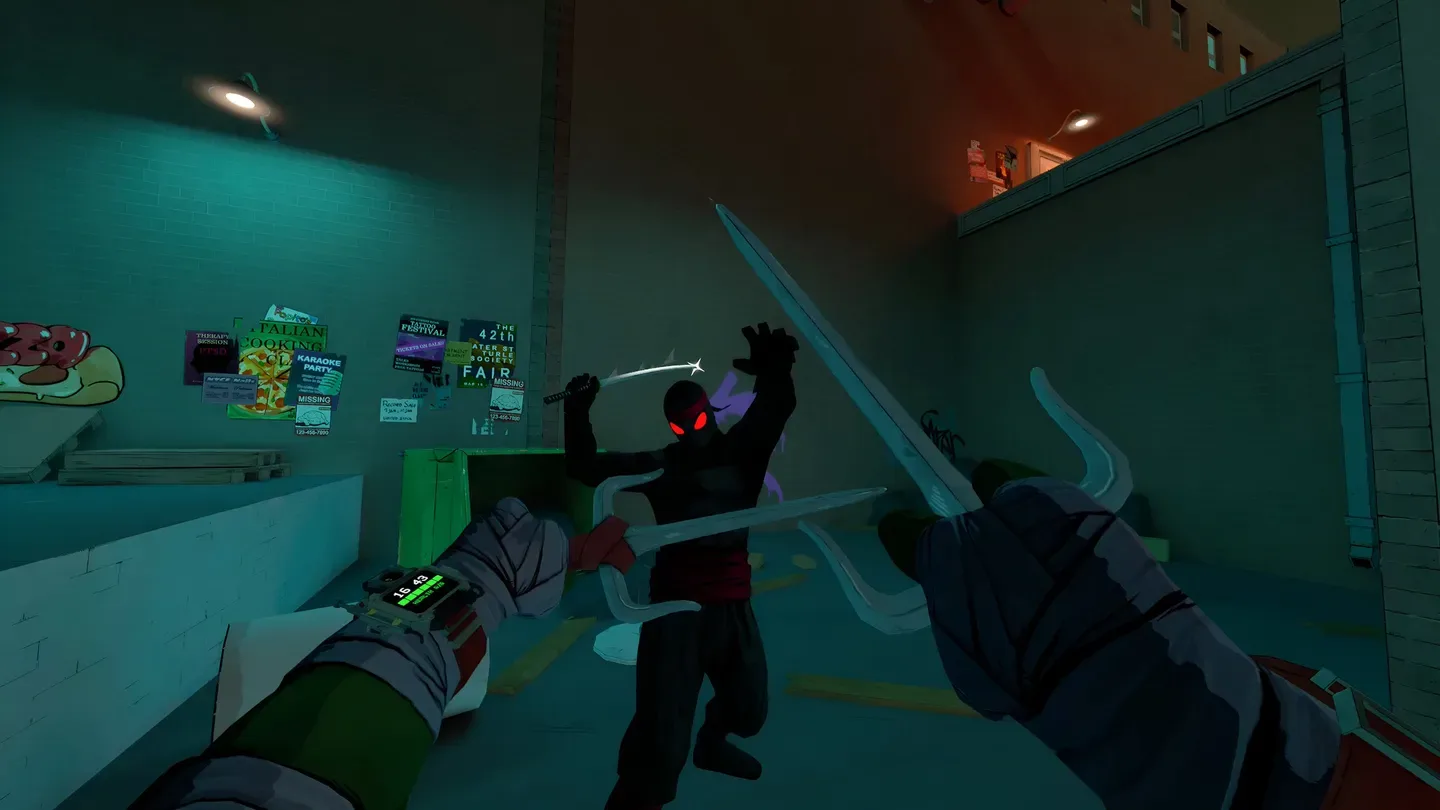
After about 8 hours in Empire City, the biggest issue that I have with its combat is a lack of physical presence. You can move through enemies, and they can move through you. It doesn’t ruin the experience, but it does chip away at immersion.
Enemy variety is also limited, and encounter sizes remain relatively small. Even later in the game, you rarely face more than five enemies at once. The combat system requires you to improve as you progress, however the difficulty curve seems to plateau just when you’re ready for that next level of challenge. It’s a tease that Empire City got me ready for an all-out-brawl then never gave it to me.
Stealth is also present, albeit in a very light-touch way. Rather than always going for a headlong assault, you can sneak up on enemies and perform silent takedowns - but the system is forgiving to the point of being almost trivial. AI awareness is minimal and it’s entirely possible to stand laughably close to enemies without being detected. It’s not as silly as Thief: Legacy of Shadow, but it’s close. Still, the game doesn’t force stealth, offering it as optional layer rather than a flawed core system.
One of my favorite moments in the game was a section on the docks where you move between shipping containers and cranes, bounding undetected from one to the next, dropping down from an unseen height to dispatch a single enemy and then disappearing just as quickly. It's hardly Batman: Arkham Shadow, but it did make me feel like a ninja.
A turtle ninja.
Where Empire City really shines is in its multiplayer. I played through most of the campaign solo and never felt like the experience suffered from it. But stepping into co-op, particularly a full four-player session, was a dream come true.
Running across rooftops as a full team of mutant turtles, each with distinct weapons and playstyles, is exactly the fantasy you want this game to deliver. Roaming the city becomes more chaotic and significantly more fun. One particular boss fight with four players was a spectacular highlight - the kind of moment that feels like it’s been lifted straight out of your childhood imagination.
That said, multiplayer does expose some balancing issues. Enemy numbers don’t scale substantially, so groups tend to overwhelm enemies with relative ease. I would rather work through the campaign solo and then go into multiplayer to goof about on the rooftops.
Empire City is visually great.
The cell-shaded art style is a perfect fit for the TMNT universe, and Cortopia’s chosen interpretation of the turtles themselves is one of my favourites. I spent an embarrassing amount of time fooling around in front of in-game mirrors, something I rarely do in VR.
The environments capture a stylised, nighttime New York City, with Chinatown standing out with its denser layout of interactive elements.
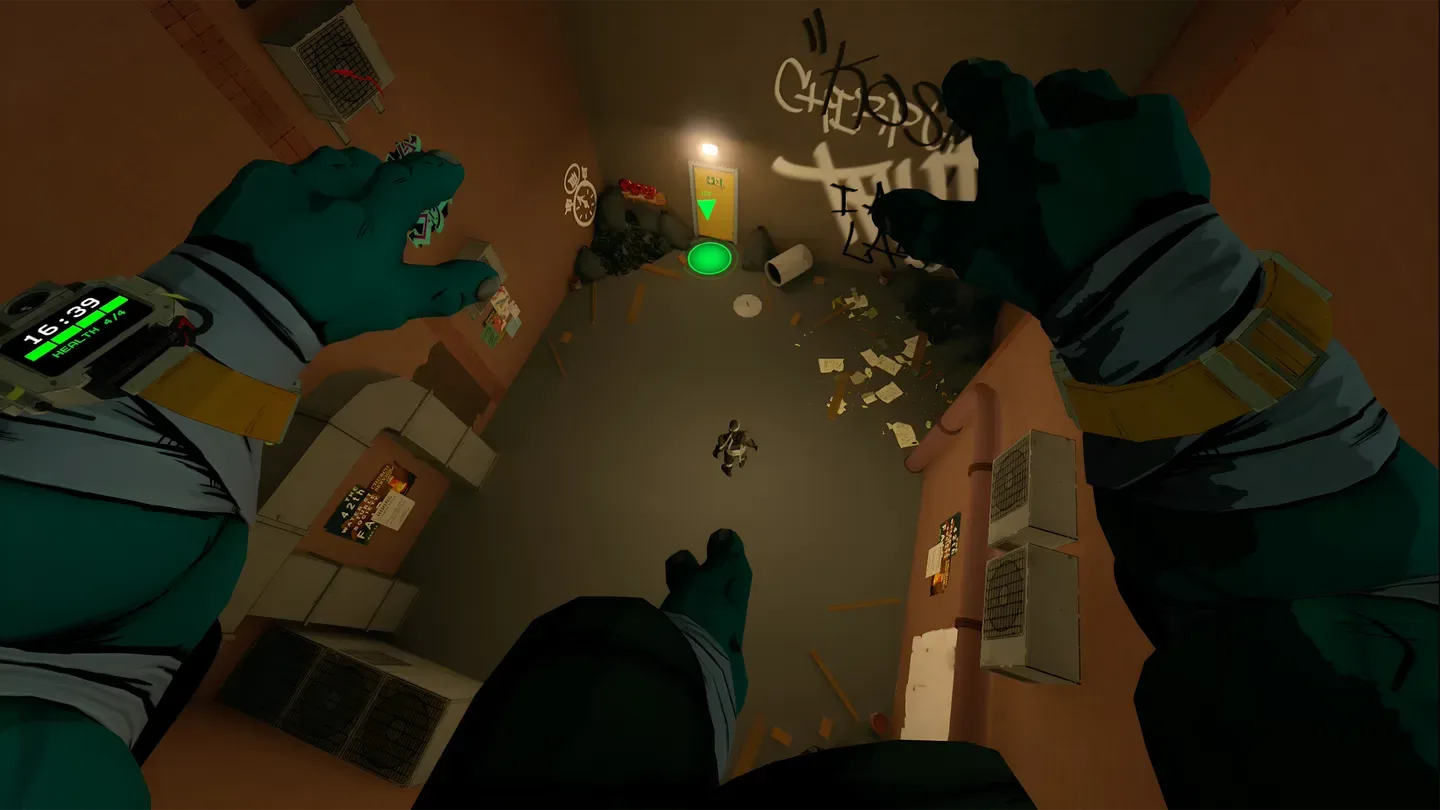
That said, there are some technical compromises; physical interaction is limited - weapons clip through objects and hands pass through surfaces - but after a couple of hours, I found myself overlooking these issues simply because I was enjoying the experience. Empire City is also a remarkably stable game. I can’t think of a single time in my playthrough that the framerate stuttered at all – even during a hectic, 4-player boss fight.
The sound design is largely excellent.
Voice acting is a major highlight, with an accomplished cast, all of whom are reprising their roles from other iterations of the franchise. The actors clearly understand these characters and deliver performances that feel confident and engaging. Combined with the strong writing, the performances add to the sense that you’re inside a TMNT story.
Sound effects, combat and environmental, are also solid across the board.
The one weak point is the music. In several sections, the score actively detracted from the experience. While certain high-energy moments land well, much of the soundtrack feels grating and repetitive.
Empire City also boasts a well-designed progression system. Each turtle has distinct stats and upgrade paths, encouraging experimentation and specialisation.
I found switching between characters brilliant. If I was just roaming around completing side missions and griding for loot, then I’d load Donnie with perks and head out. But, If I knew I had a boss fight coming up I’d switch to Raph, the teams resident tank. Big health, heavy damage and a super aggressive play style. This nuanced system adds a layer of strategic depth that I initially overlooked but grew to really appreciate.
However, the free roaming gameplay elements feel massively underdeveloped. Rather than playing through missions, players are free to stalk the rooftops, intercepting 911 calls and then swooping in to intervene. On paper, this sounds amazing, and from having played games with similar loops I was more excited for this element of the game than the campaign itself.
Unfortunetly, unlike the Spider-man games, Empire City lacks NPCs, traffic, or any real sense of life and this is easily the biggest missed opportunity in the game. All 911 calls, regardless of the what the pithy voice over says, result in you beating down a small group of ninja and retrieving a briefcase. Every time. Also, stopping these crimes doesn’t give you any tangible benefit, which drastically reduces the impetus to actually engage.
Had Empire City had the scope to deliver a slightly livelier iteration of the city, with more diverse encounters and a better risk/reward proposition, then this side element could have been endlessly replayable. That said, this is only a side element of the game, and doesn’t detract from the success of the campaign.
Teenage Mutant Ninja Turtles: Empire City is a slow burner that ultimately lands in a very satisfying place.
It doesn’t make the best first impression; the opening hour can feel underwhelming, particularly in combat, and there are clear areas where the game falls short of its potential. But stick with it, and it reveals a genuinely enjoyable and often brilliant experience.
The traversal is fantastic, the game’s combat grows into something engaging, the co-op is a joy, and the overall package delivers on the core fantasy of embodying a ninja turtle. Sure, there are flaws, but what matters most is that the game consistently gave me reasons to come back, and each session revealed something new to enjoy.
If you embrace what the game is trying to be - if you climb the rooftops, move like a ninja, and lean into the fantasy - there’s a lot to love here. When you find yourself leaping into battle shoulder to shoulder with three other turtles, shouting “Turtle Power”…
Well, it’s very hard not to smile.
As an Amazon Associate we earn from qualifying purchases. Prices and availability may vary.
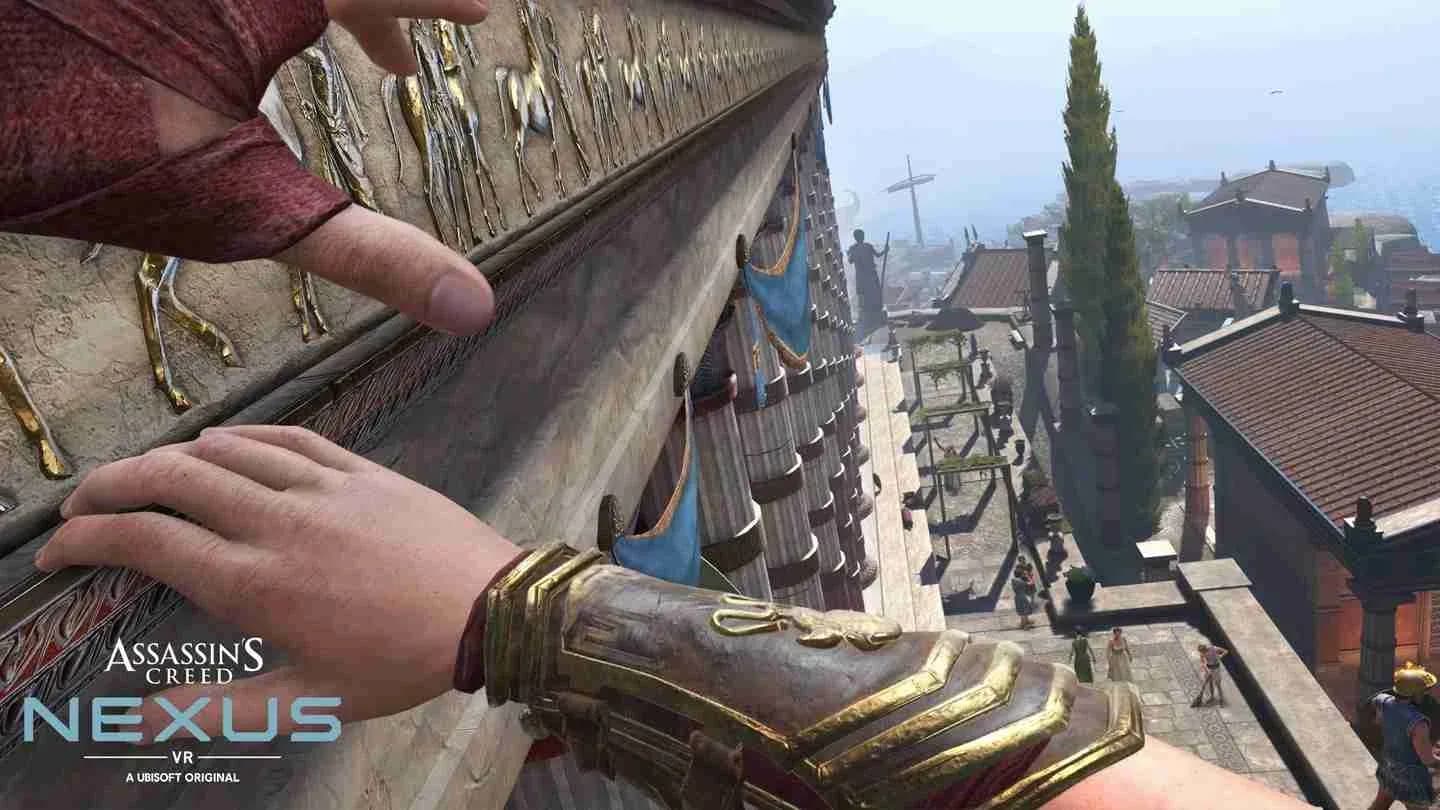
Assassin's Creed Nexus is a fantastic game that, against all odds, succeeds where many others have stumbled. It brings the gameplay of the older titles to the Quest without all the RPG baggage that had left fans clamoring for something like AC Mirage.


0 comments
No comments yet. Be first.